Earnest Money Utah: Deposits, Deadlines, and Buyer Questions
Earnest money in Utah is a good-faith deposit that shows a seller you are serious about buying their home. It is held in trust during the transaction and applied to your closing costs or down payment if the deal closes. Understanding how earnest money is handled, what the contract deadlines are, and when you can get it back helps you protect your cash and make confident decisions when buying a Salt Lake County home.
Quick Answer
Earnest money is a deposit made after your offer is accepted, typically 1%–3% of the purchase price, held in a trust account until closing. If the transaction closes, it is applied to your closing costs or down payment. If you back out for a reason covered by a contract contingency (financing, inspection, appraisal), you generally get it back. If you back out for an uncovered reason, you may forfeit it.
Key Takeaways
- Good-faith deposit: Earnest money signals your commitment to the purchase.
- Held in trust: The deposit is held by a neutral party (often the title company or brokerage) — not given directly to the seller.
- Applied at closing: If the deal closes, earnest money counts toward your closing costs or down payment.
- Contingencies protect it: You can generally recover earnest money if you back out under a contract contingency.
- Deadlines are binding: The REPC sets deadlines for deposits and contingencies — missing them can affect your rights.
- Part of cash to close: Earnest money reduces the amount you still owe at closing — see our closing-costs guide.

What Is Earnest Money?
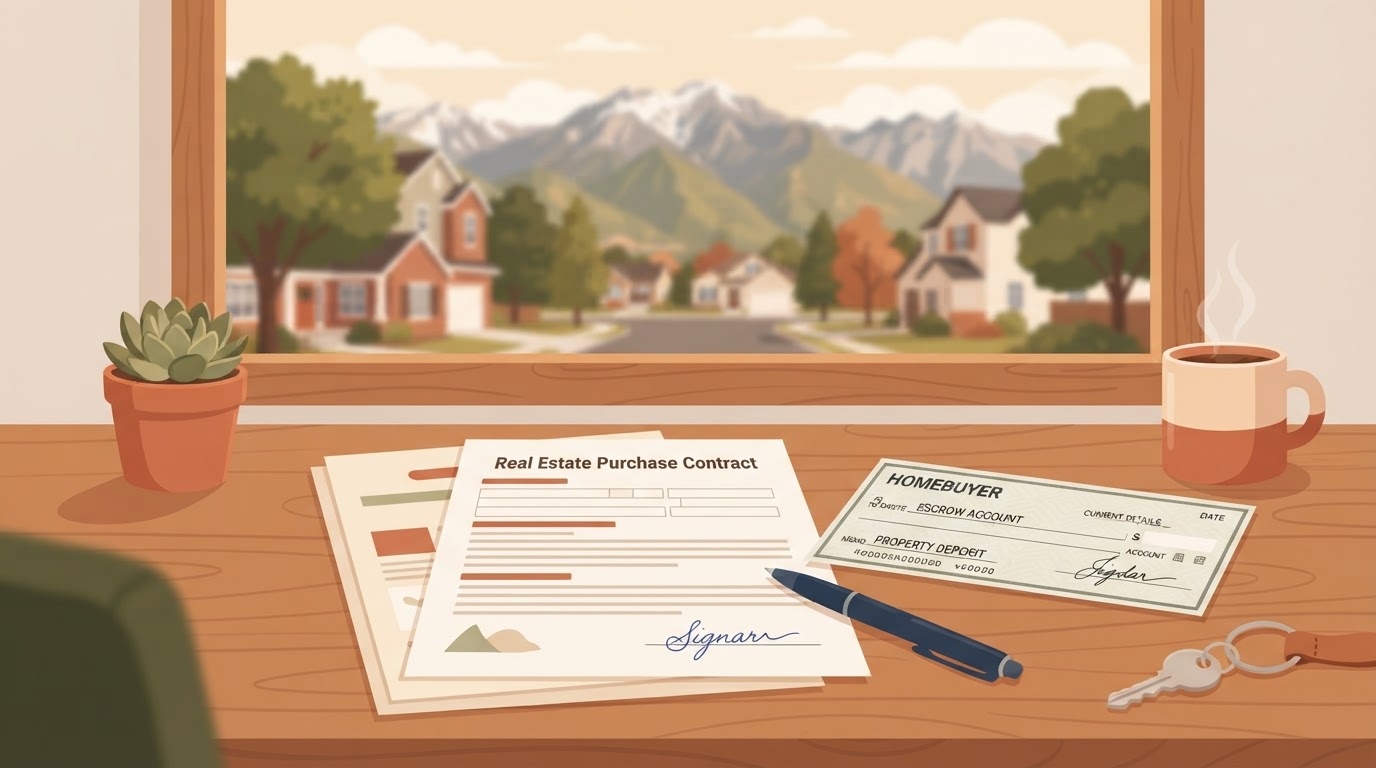
Earnest money is a deposit you make after the seller accepts your offer. It demonstrates that you are acting in good faith and intend to complete the purchase. The deposit is not paid directly to the seller — it is held by a neutral third party (typically the title company or the brokerage's trust account) until closing or until the contract is terminated.
How Much Earnest Money?
The amount is negotiable, but 1%–3% of the purchase price is common in Utah. A larger deposit can make your offer more attractive to a seller by showing stronger commitment, while a smaller deposit keeps more cash available but may signal less commitment. Your agent helps you choose an amount that balances competitiveness with your budget.
How the Deposit Is Handled
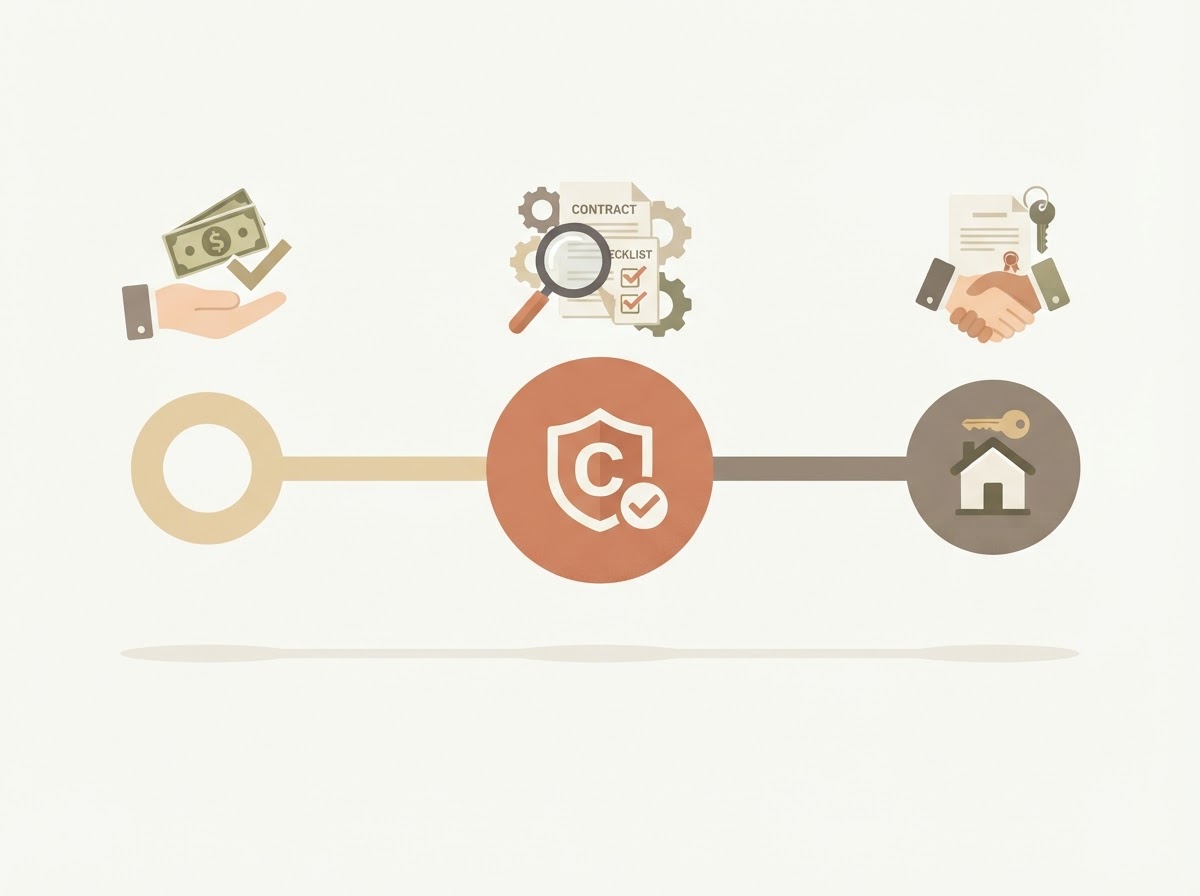
Once your offer is accepted, the earnest money is deposited into a trust account — usually with the title company or the brokerage. It stays there until one of three things happens:
- The deal closes: The deposit is applied to your closing costs or down payment.
- You terminate under a contingency: The deposit is returned to you.
- You terminate without a contingency basis: The seller may claim the deposit.
The Utah Division of Real Estate regulates how trust funds are handled. Always confirm the deposit goes to a licensed escrow or trust holder — never directly to the seller.
Contract Deadlines
The Utah Real Estate Purchase Contract (REPC) sets deadlines for the earnest money deposit and for contingencies. Key points:
- Deposit deadline: The REPC specifies when the earnest money must be delivered — often within a few business days of acceptance.
- Contingency deadlines: Inspection, financing, and appraisal deadlines determine how long you have to evaluate the property and secure your loan.
- Missing a deadline can forfeit rights: If you miss a contingency deadline, you may lose the right to back out and recover your earnest money under that contingency.
See our REPC guide for a full breakdown of contract deadlines.
When Can You Get It Back?
You can generally recover your earnest money if you terminate the contract under a valid contingency:
- Financing contingency: If you cannot obtain financing despite a good-faith effort, you can typically recover the deposit.
- Inspection contingency: If the inspection reveals issues and you terminate within the deadline, you can typically recover the deposit — see our inspection guide.
- Appraisal contingency: If the home does not appraise for the offer price and you terminate under the contingency, you can typically recover the deposit — see our appraisal guide.
If you back out for a reason not covered by a contingency, the seller may be entitled to keep the earnest money. Both parties must typically sign a release for the trust holder to disburse the funds — a dispute can delay the return.
Earnest Money and Cash to Close
Earnest money is part of your total upfront cash, but it reduces the amount you still owe at closing. For example, if your down payment and closing costs total $37,000 and you deposited $5,000 in earnest money, your remaining cash to close is roughly $32,000 (before any credits). Do not count the deposit as a new charge at closing — it is already deposited. See our closing-costs guide for a full cash-to-close breakdown.
Frequently Asked Questions
What is earnest money in Utah?
Earnest money is a good-faith deposit made after your offer is accepted, typically 1%–3% of the purchase price. It is held in a trust account and applied to your closing costs or down payment if the deal closes.
How much earnest money should I offer?
1%–3% of the purchase price is common, but the amount is negotiable. A larger deposit can strengthen your offer; a smaller deposit preserves cash. Your agent helps you choose an appropriate amount.
Who holds the earnest money deposit?
The deposit is held by a neutral third party — usually the title company or the brokerage's trust account — not by the seller directly. The Utah Division of Real Estate regulates how trust funds are handled.
Do I get my earnest money back if the deal falls through?
Generally yes, if you terminate under a valid contract contingency (financing, inspection, appraisal). If you back out for a reason not covered by a contingency, the seller may keep the deposit.
Does earnest money count toward my down payment?
Yes. If the deal closes, the earnest money is applied to your closing costs or down payment, reducing the cash you still owe at closing.
Can Scott Allen's buyer credit be combined with my earnest money?
Eligible buyers may receive a credit of up to $3,000 toward eligible closing costs, prepaid expenses, or interest-rate buydowns. Terms and eligibility apply, including lender approval and transaction requirements. The credit applies to eligible closing costs at closing and is separate from your earnest money deposit. Ask Scott how both reduce your total cash to close.
Questions About Earnest Money?
Scott Allen helps Salt Lake County buyers understand deposits, deadlines, and contingencies to protect their cash. Eligible buyers may receive a credit of up to $3,000 toward eligible closing costs, prepaid expenses, or interest-rate buydowns. Terms and eligibility apply, including lender approval and transaction requirements.
Understand the upfront budget before you choose the home.
Get a Salt Lake County Buyer Consultation or call (801) 424-9283.