Salt Lake County Property Tax: What Homebuyers Should Check
Salt Lake County property tax is a recurring cost that affects your monthly housing payment and your total cost of ownership. Before buying, you should look up the actual tax bill for the specific property, understand how taxes are prorated at closing, and know whether your lender will escrow them. Property taxes vary by city, school district, and special service districts — so do not estimate based on a neighbor's bill or a generic rate.
Quick Answer
Salt Lake County property taxes are based on the assessed value of the property and the combined tax rate for its city, school district, and special districts. You can look up the actual tax bill for any parcel using the Salt Lake County Assessor's online records. At closing, taxes are prorated between buyer and seller. Your lender may require an escrow account that collects tax payments with your monthly mortgage.
Key Takeaways
- Look up the actual bill: Use the county assessor's records to find the real tax amount for the specific parcel — do not estimate.
- Taxes vary by location: City, school district, and special service districts all affect the rate.
- Proration at closing: The buyer and seller split the year's taxes based on the closing date.
- Escrow is common: Most lenders collect property taxes monthly via an escrow account.
- Reassessment after sale: A sale can trigger a reassessment — the new assessed value may differ from the seller's.
- Factor taxes into your budget: Property tax is part of PITI — see our cost of living guide.
How Salt Lake County Property Tax Works
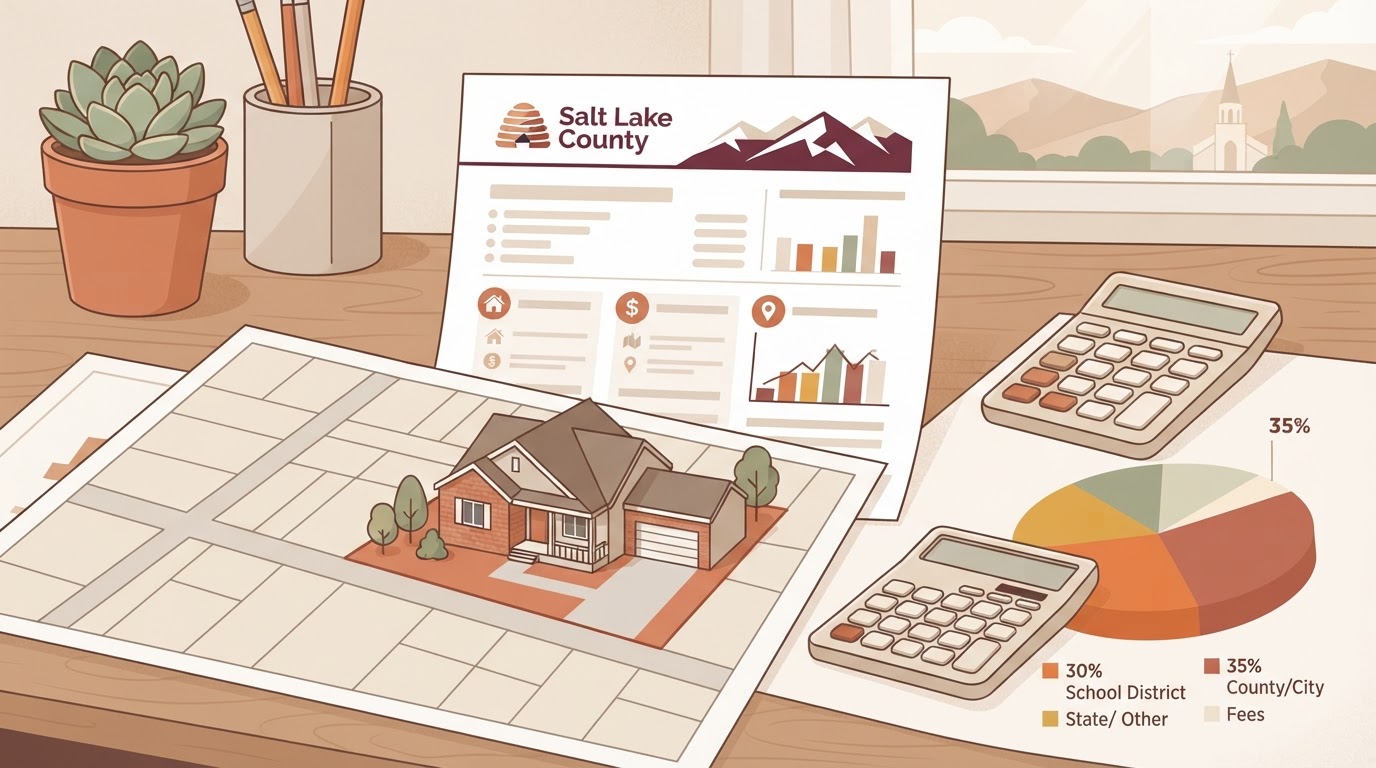
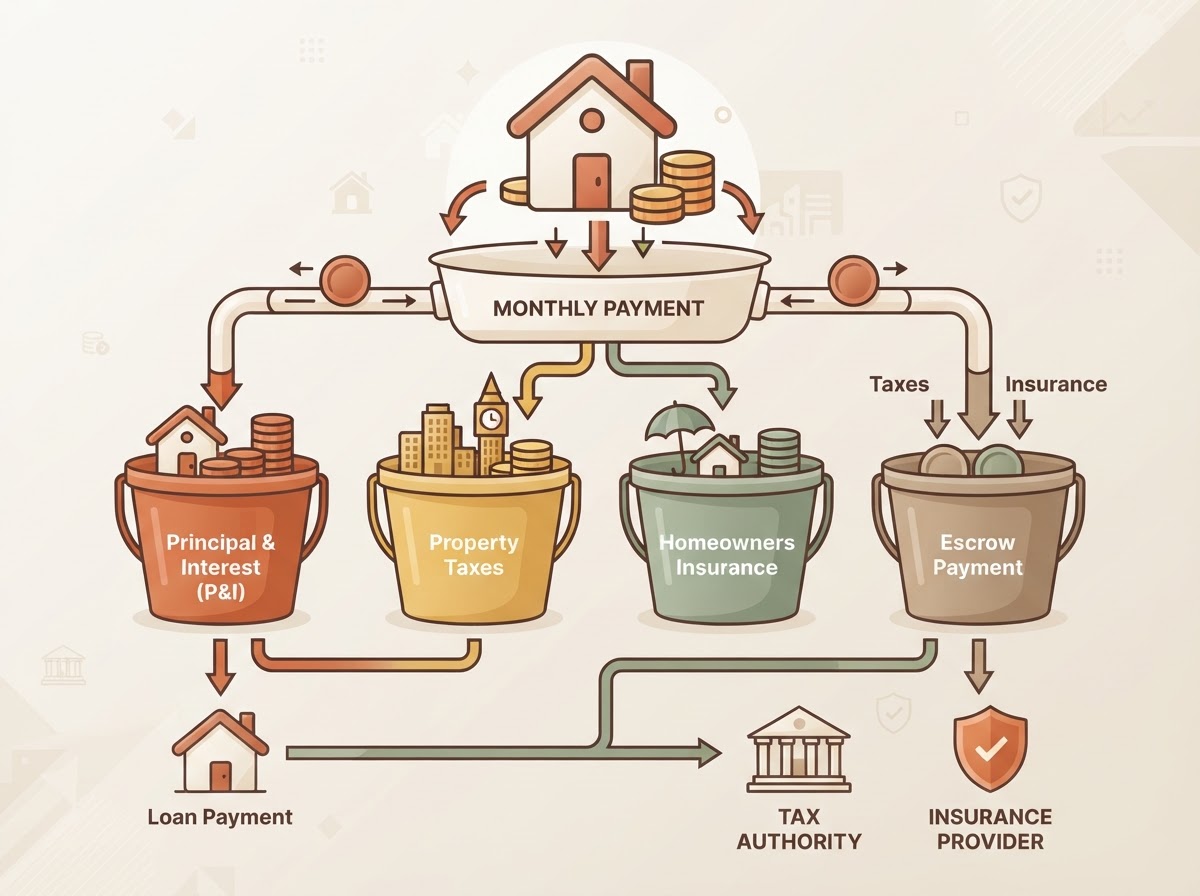
Property tax in Salt Lake County is calculated by applying a tax rate to the property's assessed value. The total rate is a combination of rates from several taxing entities: the county, the city, the school district, and any special service districts (such as water, sewer, or fire districts). Because the rate varies by location, two homes with the same value can have different tax bills depending on where they sit.
How to Look Up a Property's Tax Bill
You can look up the actual tax bill for any parcel in Salt Lake County using the Salt Lake County Assessor's online records. Search by address or parcel number to find:
- The current assessed value
- The most recent tax bill amount
- The taxing entities that apply to the parcel
- Payment status
Always look up the specific parcel you are considering — a neighbor's bill or a generic rate will not reflect special assessments or differences in assessed value.
Proration at Closing
At closing, property taxes are prorated between the buyer and seller based on the closing date. If the seller has already paid the full year's taxes, the buyer reimburses the seller for the portion of the year the buyer will own the home. If the taxes are not yet paid, the seller credits the buyer for the portion of the year the seller owned the home. The title company calculates the proration as part of the closing statement.
Escrow Accounts
Most lenders require an escrow (impound) account for property taxes and insurance. With an escrow account, a portion of your monthly mortgage payment is set aside for taxes and insurance, and the lender pays the tax bill when it is due. This spreads the cost across the year rather than requiring a lump sum. At closing, you will fund the initial escrow deposit — see our closing-costs guide for how this fits into your cash to close.
Reassessment After a Sale
A sale can trigger a reassessment of the property's value. The new assessed value may be higher or lower than the seller's, which can change the tax bill going forward. Do not assume the seller's current tax bill will be your tax bill — confirm with the assessor's office how a sale may affect the assessment, and budget conservatively.
Property Tax Checklist
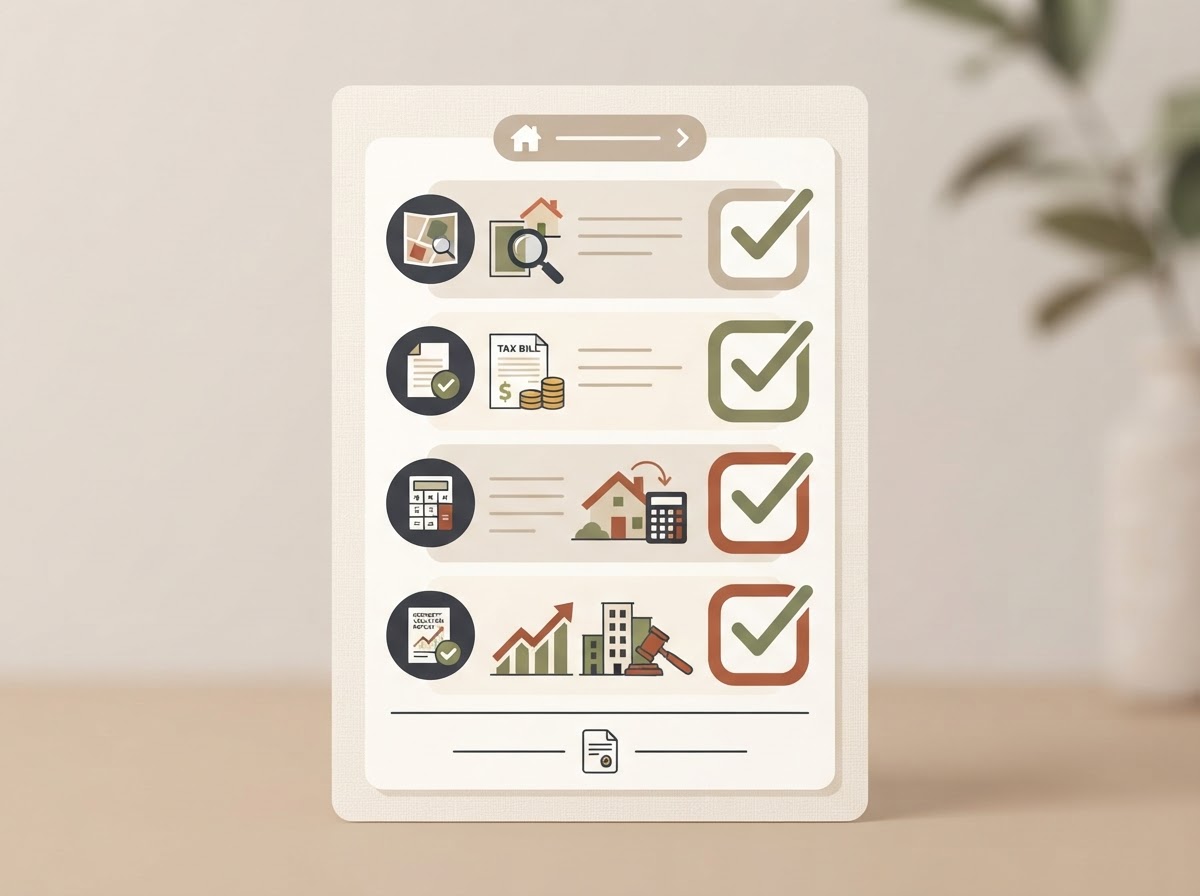
- Look up the actual tax bill for the specific parcel on the assessor's website.
- Identify the taxing entities (city, school district, special districts) that apply.
- Ask your lender whether escrow is required and estimate the monthly tax portion.
- Ask how a sale may trigger a reassessment and budget conservatively.
- Review the proration on your closing statement.
- Factor property tax into your total monthly housing cost.
For school district boundaries, see our school districts guide. Eligible buyers may receive a credit of up to $3,000 toward eligible closing costs, prepaid expenses, or interest-rate buydowns. Terms and eligibility apply, including lender approval and transaction requirements.
Frequently Asked Questions
How do I find the property tax for a home in Salt Lake County?
Use the Salt Lake County Assessor's online records to search by address or parcel number. You will find the current assessed value, the most recent tax bill, and the taxing entities that apply to the parcel.
How are property taxes prorated at closing?
Taxes are split between the buyer and seller based on the closing date. If the seller has paid the full year, the buyer reimburses the seller for the buyer's portion. If unpaid, the seller credits the buyer for the seller's portion. The title company calculates the proration.
Will my property tax be the same as the seller's?
Not necessarily. A sale can trigger a reassessment, and the new assessed value may differ from the seller's. Do not assume the seller's current bill will be your bill — budget conservatively and confirm with the assessor's office.
What is an escrow account for property taxes?
An escrow account collects a portion of your monthly mortgage payment for property taxes and insurance. The lender pays the tax bill when due. This spreads the cost across the year instead of requiring a lump sum.
Why do property taxes vary within Salt Lake County?
Tax rates vary by city, school district, and special service districts. Two homes with the same value can have different tax bills depending on their location and the taxing entities that apply.
Can Scott Allen's buyer credit help with property tax costs?
Eligible buyers may receive a credit of up to $3,000 toward eligible closing costs, prepaid expenses, or interest-rate buydowns. Terms and eligibility apply, including lender approval and transaction requirements. The credit applies to eligible closing costs, which can free up cash for your initial escrow deposit. Ask Scott how it fits your purchase.
Questions About Property Taxes?
Scott Allen helps Salt Lake County buyers understand property taxes, escrow, and total housing costs. Eligible buyers may receive a credit of up to $3,000 toward eligible closing costs, prepaid expenses, or interest-rate buydowns. Terms and eligibility apply, including lender approval and transaction requirements.
Understand the upfront budget before you choose the home.
Get a Salt Lake County Buyer Consultation or call (801) 424-9283.